Buy 5 or more, save 35% · code

Back to Catalog

Solvents

L-Carnitine 600mg/ml (20mL)

$63Per Unit

Pharmaceutical-grade liquid L-carnitine with analytical verification for metabolic research protocols.

Lot LC2025-09B · COA on request
600mg/ml, 20mL volume
Room temperature

1 × $63.00 = $63.00

4 more units of anything - mix and match - unlocks 35% off with code EHAB35.

L-Carnitine 600mg/ml (20mL)

$63.00
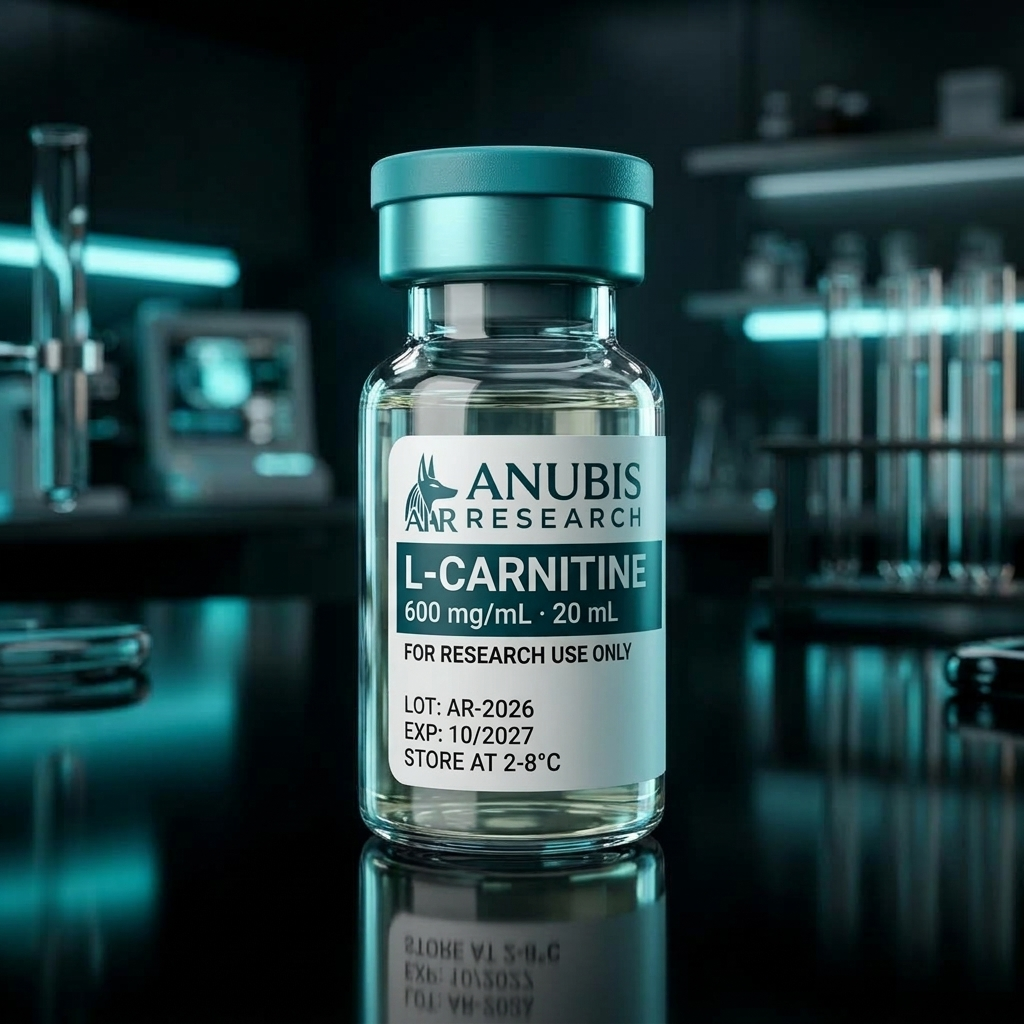
Research use only
L-Carnitine 600mg/ml (20mL) research packaging
600mg/ml, 20mL volume
Anubis Research Labs

Documentation

The certificate of analysis for the current lot (Lot LC2025-09B) is sent on request, so you can review identity and purity testing before you order.

Request the lot COA

Research summary

L-Carnitine(Levocarnitine, Carnitor)

Regulatory status
FDA-approved as levocarnitine (Carnitor, first approved December 1985) for primary systemic carnitine deficiency and some inborn errors of metabolism. Research material here is not an approved drug product.
Strongest evidence
Approved drug; a meta-analysis of controlled trials after heart attack; human tracer studies
Overview

L-carnitine carries long-chain fatty acids into mitochondria, where they are burned for energy. It is abundant in red meat.

What researchers study it for
  • Carnitine deficiency (the approved use)
  • Outcomes after heart attack (meta-analysis)
  • Gut-microbe conversion to TMAO and atherosclerosis
Mechanism

It is a carrier molecule that moves long-chain fatty acids across the inner mitochondrial membrane for oxidation - the main energy source of heart and skeletal muscle.

Evidence (4)
  1. Approved drug

    FDA approval (Carnitor, 1985)

    Levocarnitine was approved on December 27, 1985 (NDA 018948). The label lists primary systemic carnitine deficiency and secondary carnitine deficiency from inborn errors of metabolism.[1]

  2. Review

    After heart attack: meta-analysis (Mayo Clin Proc 2013)

    13 controlled trials with 3,629 patients after acute myocardial infarction. L-carnitine was associated with 27% lower all-cause mortality, 65% fewer ventricular arrhythmias and 40% less angina, with no reduction in heart failure or repeat heart attack. The authors call for large randomized trials in the modern era.[2]

  3. Animal study

    TMAO and atherosclerosis (Nat Med 2013)

    Gut bacteria convert dietary L-carnitine into TMAO. Long-term L-carnitine supplementation increased atherosclerosis in mice unless their gut bacteria were suppressed, and omnivores made more TMAO from L-carnitine than vegans or vegetarians.[3]

  4. Human · small / uncontrolled

    The human gut pathway (J Clin Invest 2019)

    Tracer studies in omnivores and vegans or vegetarians: omnivores produced more than 20 times as much TMAO from labelled L-carnitine, and chronic L-carnitine supplementation switched on the gut-microbe step that makes TMA.[4]

Limitations of the evidence
  • The heart-attack meta-analysis authors ask for large modern randomized trials to confirm it.
  • Mouse and human tracer studies link supplemental L-carnitine to TMAO, a metabolite the authors associate with atherosclerosis.
  • Products on this site are sold for laboratory research only. They are not the medicines used in the trials above, and those results do not apply to research material.
Sources (4)

Reviewed 2026-10-10. Summaries describe published research and regulatory records; they are not medical advice and do not describe how to use this product. Sold for laboratory research use only.