Buy 5 or more, save 35% · code

Back to Catalog

Peptides

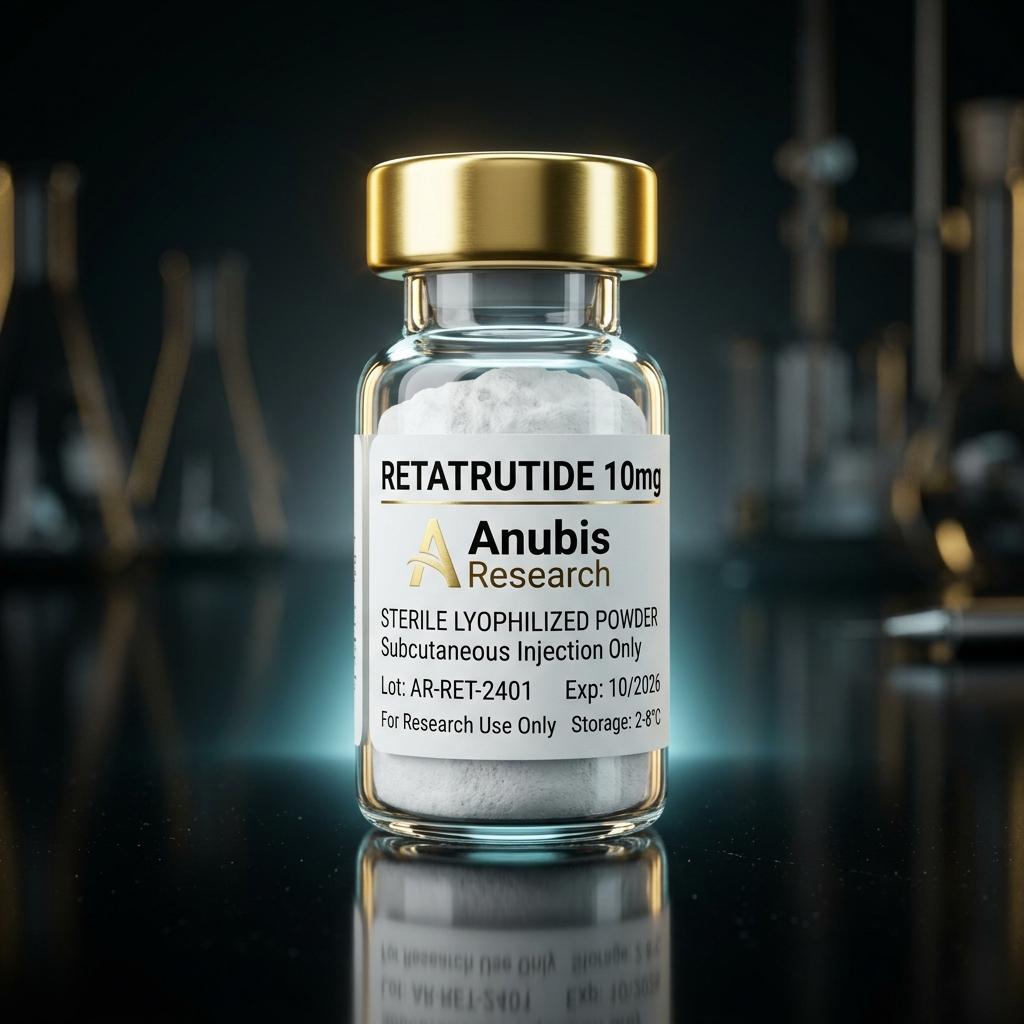
Retatrutide 10 mg

$299Per Unit

Each vial ships with QR-verifiable Certificates of Analysis, tri-agonist sequence verification, and validated stability reports. Fulfilled from our Chicago cold chain with calibrated thermal monitoring.

Lot R2025-10A · COA on request
Lyophilized tri-agonist, sterile stoppered vial, 10 mg fill
2–8°C (stable 30 days)

1 × $299.00 = $299.00

4 more units of anything - mix and match - unlocks 35% off with code EHAB35.

Retatrutide 10 mg

$299.00
Research use only
Retatrutide 10 mg research packaging
Lyophilized tri-agonist, sterile stoppered vial, 10 mg fill
Anubis Research Labs

Documentation

The certificate of analysis for the current lot (Lot R2025-10A) is sent on request, so you can review identity and purity testing before you order.

Request the lot COA

Research summary

Retatrutide(LY3437943)

Regulatory status
Investigational - not FDA-approved. Phase 3 results were published in 2026; Eli Lilly has said it plans to submit a Biologics License Application to the FDA in the first quarter of 2027.
Strongest evidence
Large, randomized phase 3 trials in humans (sponsor-funded)
Overview

Retatrutide is an investigational once-weekly peptide developed by Eli Lilly that activates three hormone receptors - GIP, GLP-1 and glucagon. It is the most clinically advanced 'triple agonist' studied for obesity and type 2 diabetes.

What researchers study it for
  • Obesity and overweight (TRIUMPH program)
  • Type 2 diabetes (TRANSCEND-T2D program)
  • Knee osteoarthritis pain and obstructive sleep apnea in people with obesity
  • Kidney and cardiovascular outcomes (trials still running)
Mechanism

GIP and GLP-1 receptor activation are the 'incretin' signals behind drugs like tirzepatide and semaglutide (appetite, insulin secretion). Retatrutide adds glucagon receptor activation, which in research models is linked to higher energy expenditure and liver fat reduction.

Evidence (4)
  1. Human · randomized trial

    TRIUMPH-1 (phase 3, NEJM 2026)

    2,339 adults with obesity and without diabetes, 80 weeks. Mean body-weight change was −17.6%, −23.7% and −25.0% across the three retatrutide arms versus −3.9% with placebo. In subgroups, knee osteoarthritis pain scores and sleep-apnea events per hour fell more than with placebo. Gastrointestinal effects were the most common adverse events.[1][5]

  2. Human · randomized trial

    TRIUMPH-2 (phase 3, Lancet 2026)

    1,152 adults with obesity and type 2 diabetes, 80 weeks. Weight change was −11.9% to −18.8% versus −5.1% with placebo. Diarrhoea and nausea were more common than with placebo; hypotension and dysesthesia were also more frequent, and stopping treatment because of adverse events was more common at the two higher doses.[2]

  3. Human · randomized trial

    TRANSCEND-T2D-1 (phase 3, Lancet 2026)

    537 adults with type 2 diabetes managed by diet and exercise, 40 weeks. HbA1c fell by 1.69 to 1.94 percentage points versus 0.81 with placebo, and body weight by 11.5% to 15.3% versus 2.6%.[3]

  4. Human · randomized trial

    Phase 2 trial (NEJM 2023)

    338 adults with obesity, 48 weeks. Weight change reached −24.2% in the highest-dose group versus −2.1% with placebo. Gastrointestinal events were dose-related, and heart rate rose in a dose-dependent way.[4]

Limitations of the evidence
  • All pivotal trials were funded and largely run by the manufacturer.
  • Longest published treatment period is 80 weeks; long-term cardiovascular and kidney outcome trials are still underway.
  • No published head-to-head result against tirzepatide yet (a comparison trial is registered).
  • Products on this site are sold for laboratory research only. They are not the medicines used in the trials above, and those results do not apply to research material.
Questions researchers ask
Is retatrutide approved?
No. As of October 2026 it is investigational in every country we are aware of. Lilly's stated plan is a U.S. submission in early 2027; approval would follow only after FDA review.
How does it differ from tirzepatide?
Tirzepatide activates two receptors (GIP and GLP-1). Retatrutide adds a third, the glucagon receptor. A trial comparing the two directly is registered (NCT06662383) but had not published results at our last review.
What side effects did trials report?
Mostly gastrointestinal (nausea, diarrhoea). Trials also reported dose-related heart-rate increases (phase 2) and more hypotension and dysesthesia than placebo (TRIUMPH-2).
What is the 'GLP-3 RT' listing?
Our GLP-3 RT listing is described as a GLP-1/GIP/glucagon receptor agonist in a smaller vial. Ask us for the lot certificate of analysis to see its verified identity.
Sources (7)

Reviewed 2026-10-02. Summaries describe published research and regulatory records; they are not medical advice and do not describe how to use this product. Sold for laboratory research use only.